Healthcare AIPurdue UniversitySoftware Engineer, AI Research2024 to 2025Research
Clinical AI Assistant
Lets a nurse chart by talking instead of typing. Runs on the hospital’s own hardware, so patient data never leaves the building.
Problem
Clinical AI has to be useful without being careless.
Privacy, latency, and interpretability matter as much as the model does, and a nurse mid-shift will not wait on a round trip to someone else’s API.
Approach
I built a clinical assistant with hard privacy constraints: nothing leaves the device that doesn’t have to.
Local speech-to-text, self-hosted models, and an interface a nurse could use one-handed while doing something else.
How it works
A voice-first clinical assistant a nurse can use one-handed, mid-shift.

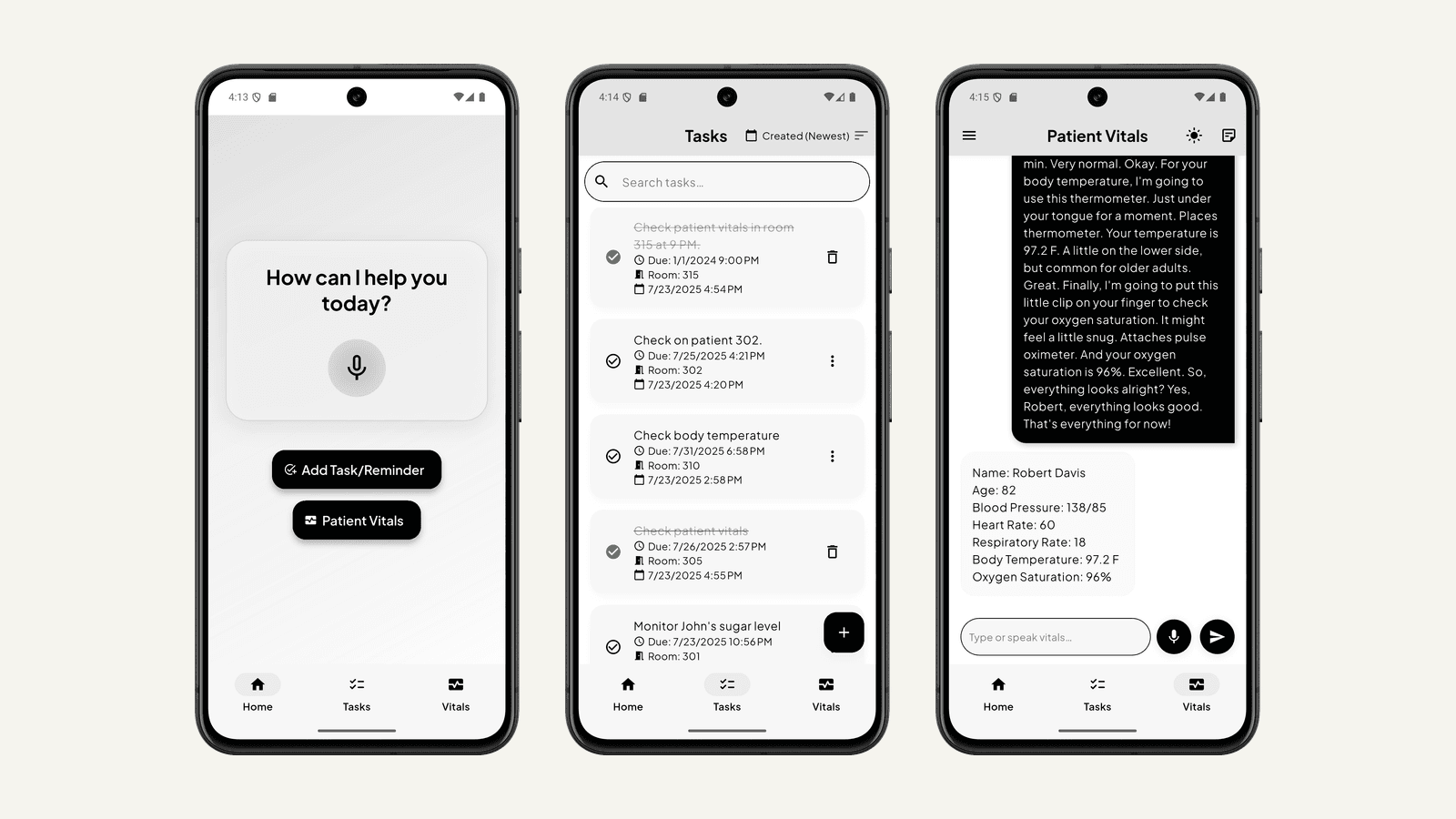
Flutter and TypeScript application layer built around voice-first clinical workflows: tasks, reminders, and patient vitals.
Self-hosted LLaMA 3.2 with a zero-API, on-device speech pipeline, so protected health information never leaves the device.
Deployed and tested across Indiana hospitals.
Impact
Time nurses got back at the bedside instead of at a keyboard.
Presented at the Purdue Spring Research Conference.
Screens
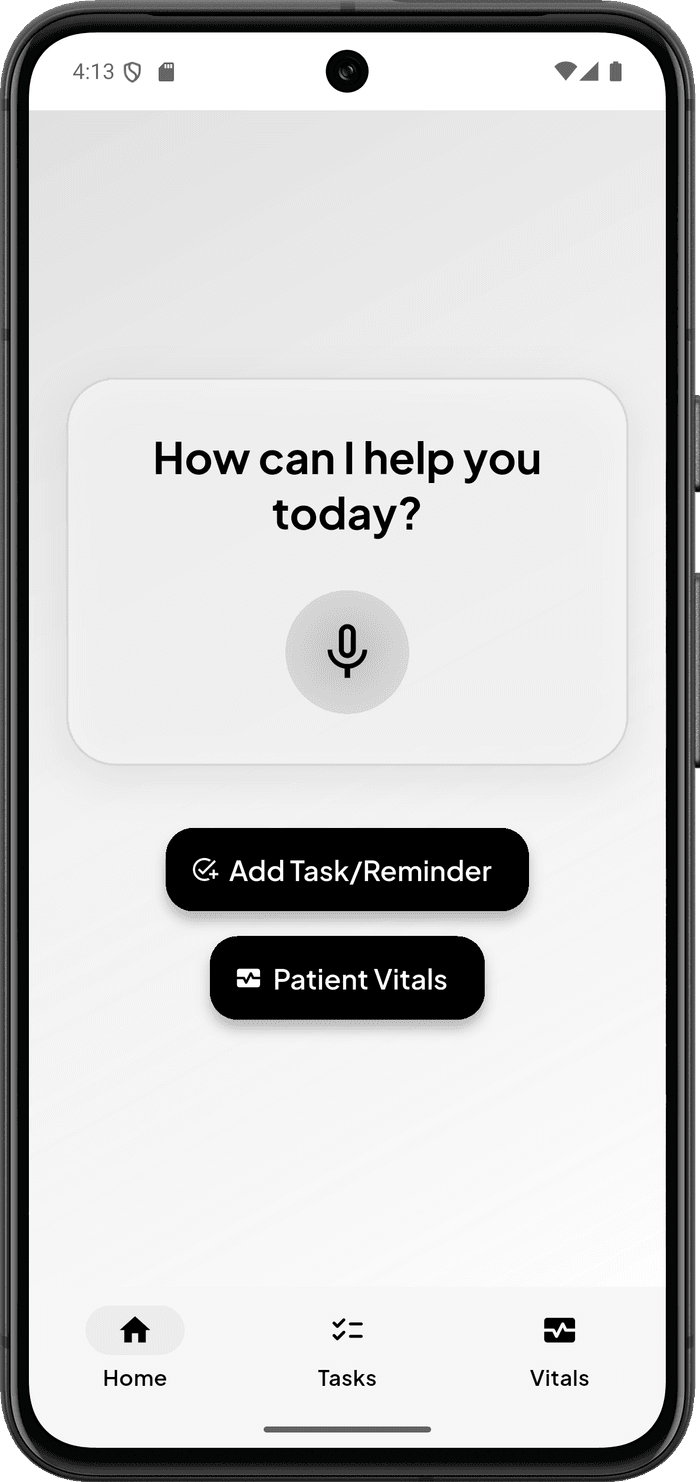
Voice-first home screen. The microphone is the primary control. 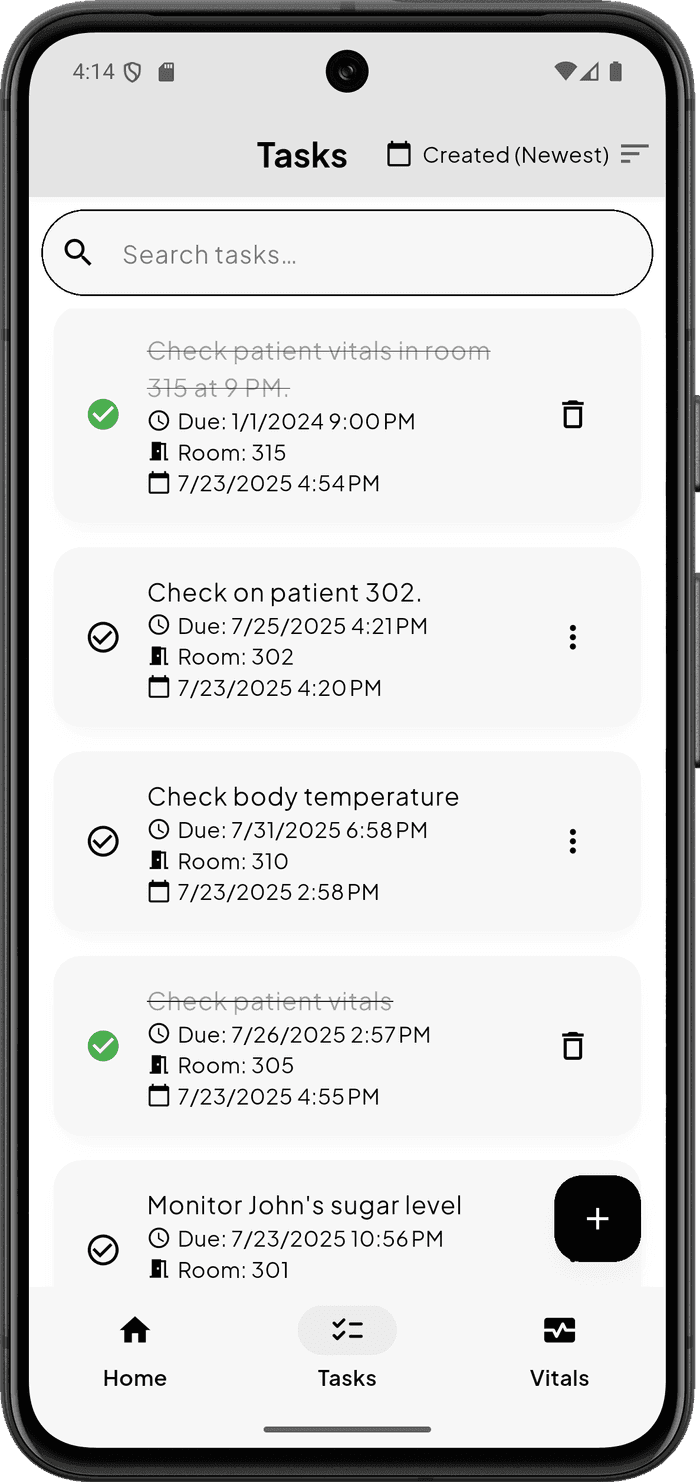
Tasks and reminders, dictated hands-free during a shift. 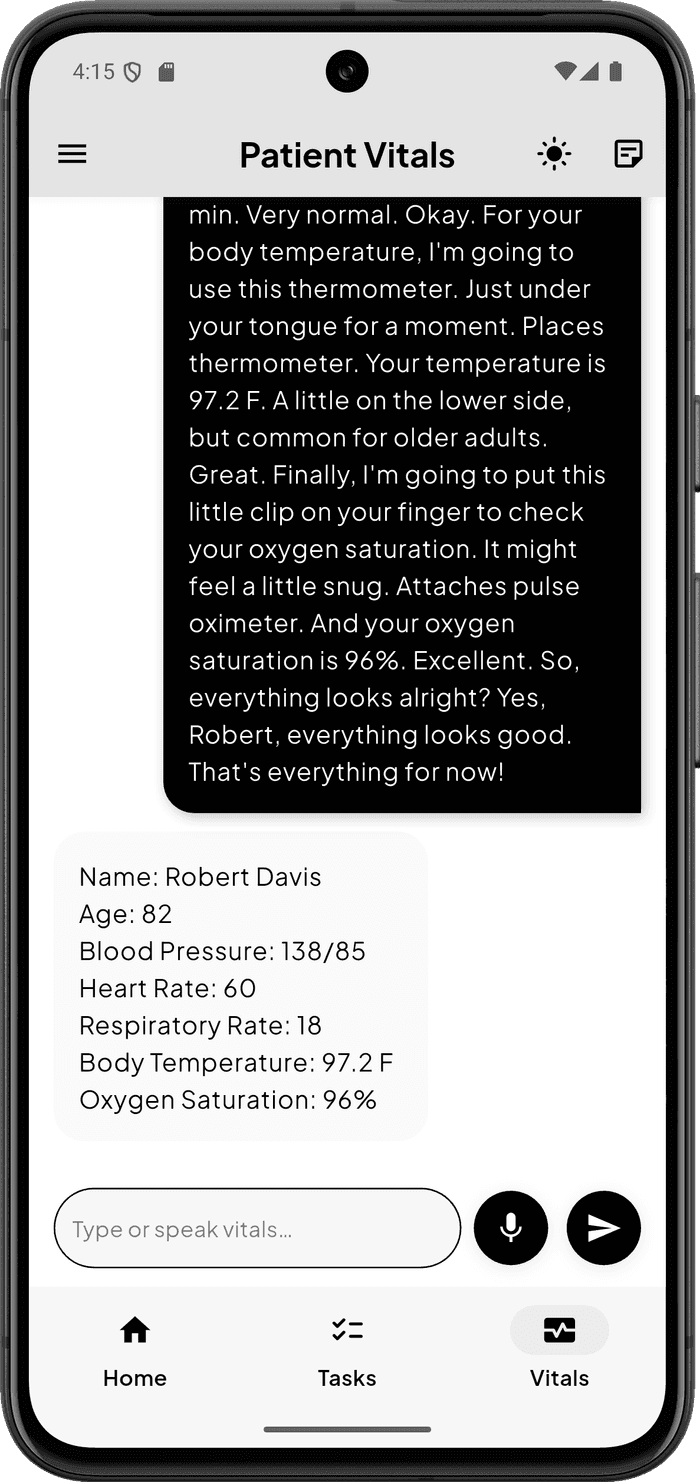
Patient vitals, captured without touching a keyboard.
Built with
Flutter · TypeScript · LLaMA 3.2 · PyTorch · On-device STT